What Is Electrical Insulating Rubber Mat Hardness? Safety Guide
1280 Views |

What Is Hardness in Electrical Insulating Rubber Mats?
Why Rubber Hardness Is Critical to Electrical Safety
When selecting an electrical insulating rubber mat for use in front of high-voltage electrical panels, one of the most important - yet often overlooked - technical parameters is Hardness.
Hardness does not only affect how the mat feels when standing on it.
It directly impacts operator safety, durability, stability, and service life of the electrical insulating rubber mat.
This article explains:
- What Hardness is
- Which hardness level is suitable for electrical insulating rubber mats
- And why ElectroMer electrical insulating rubber mats are engineered at 65 ± 5 Shore A
What Is Hardness?
Hardness is a value used to measure how hard or soft rubber is when subjected to pressure or force.
For industrial rubber products and electrical insulating rubber mats, hardness is commonly measured using the Shore A scale.
- Low Shore A value → Softer rubber, high flexibility
- High Shore A value → Harder rubber, higher load resistance, lower flexibility
Therefore, the ideal hardness is not the hardest or the softest, but a balanced value optimized for real-world applications.
Hardness of ElectroMer® Electrical Insulating Rubber Mats
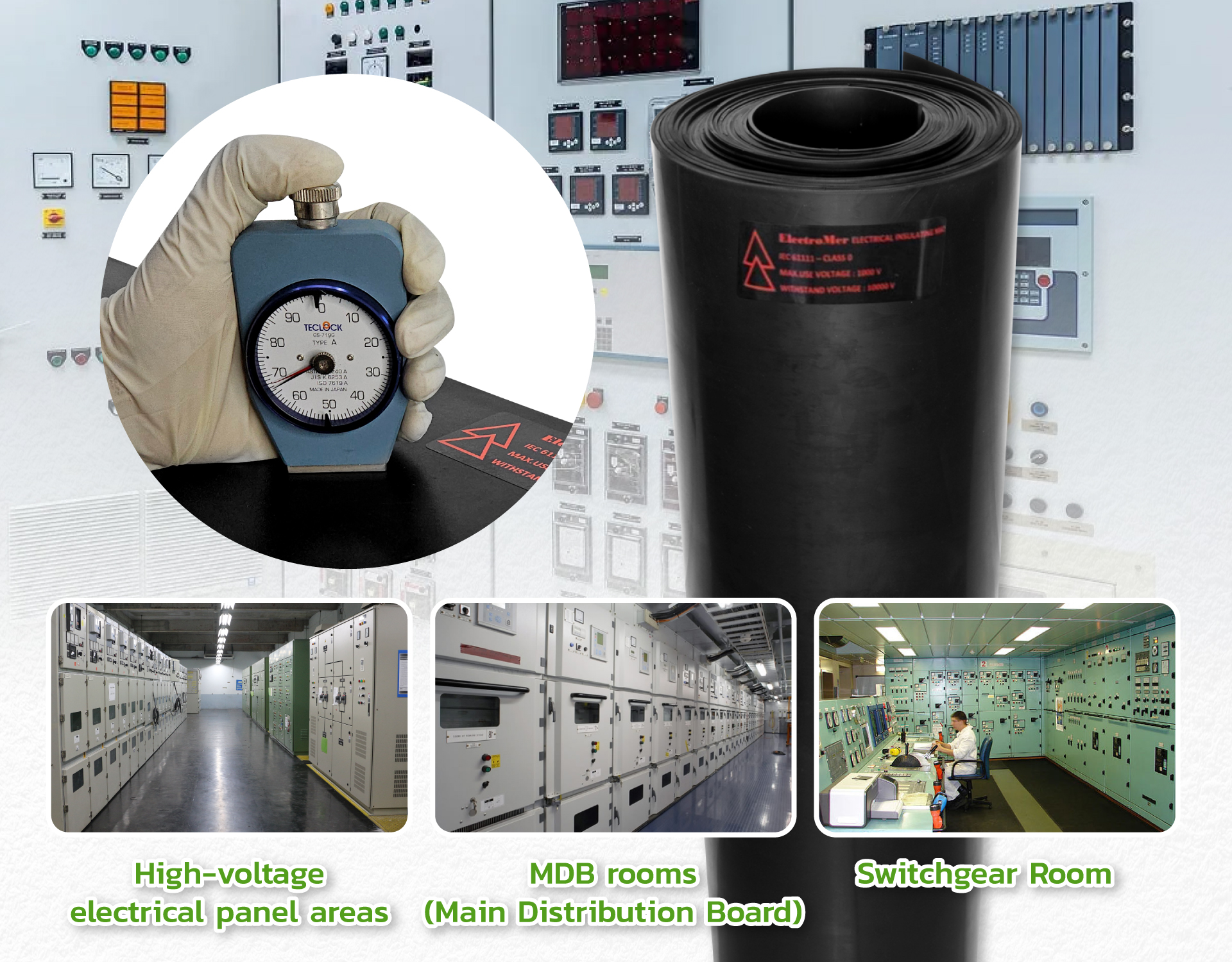
ElectroMer® electrical insulating rubber mats are engineered with a hardness of: 65 ± 5 Shore A
This hardness range is specifically designed for:
- High-voltage electrical panel areas
- MDB (Main Distribution Board) rooms
- Switchgear rooms
Why 65 ± 5 Shore A Is Ideal for High - Voltage Electrical Applications
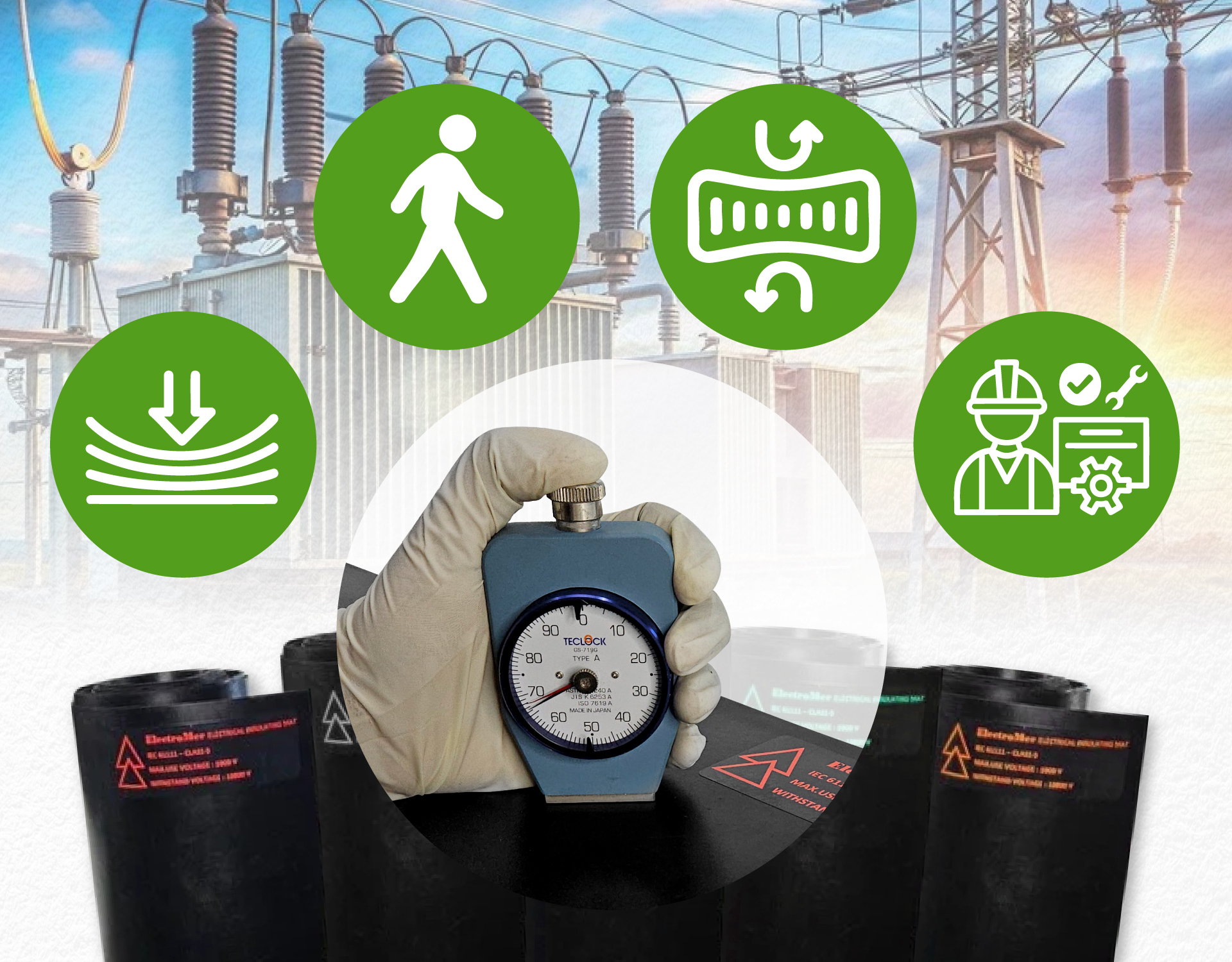
1. Optimal Flexibility for Tight Floor Contact
This hardness level allows the rubber mat to:
- Lay flat and adhere closely to the floor surface
- Avoid curling, lifting, or forming gaps
- Reduce tripping hazards and mat movement
Ideal for permanent installation in high-safety electrical environments.
2. Stable Standing and Walking - No Excessive Compression
When operators work in front of electrical panels:
- The mat does not feel spongy or unstable
- It does not compress excessively under body weight
- It helps maintain balance and posture
This stability significantly improves operator safety, especially during high-concentration electrical work.
3. Not Too Hard - Prevents Cracking and Premature Aging
If rubber is too hard:
- It becomes brittle
- Cracking and surface damage occur faster
- Service life is reduced under continuous use
With 65 ± 5 Shore A, ElectroMer® mats maintain sufficient elasticity, reducing the risk of cracking or hardening over time - even in long - term applications.
4. Strong Enough for Real Maintenance Work
Electrical panel areas involve more than standing:
- Placement of maintenance tools
- Movement of equipment
- Dragging or sliding service tools across the mat
This hardness level ensures the mat:
- Does not permanently deform
- Does not collapse under repeated loads
- Resists tearing and abrasion
Even under continuous friction and mechanical stress.
Hardness Is the Core of Electrical Insulating Rubber Mat Performance
65 ± 5 Shore A is not a random specification.
It is an engineered hardness range designed to balance:
- Operator safety
- Real-world electrical maintenance conditions
- Long-term durability and dimensional stability
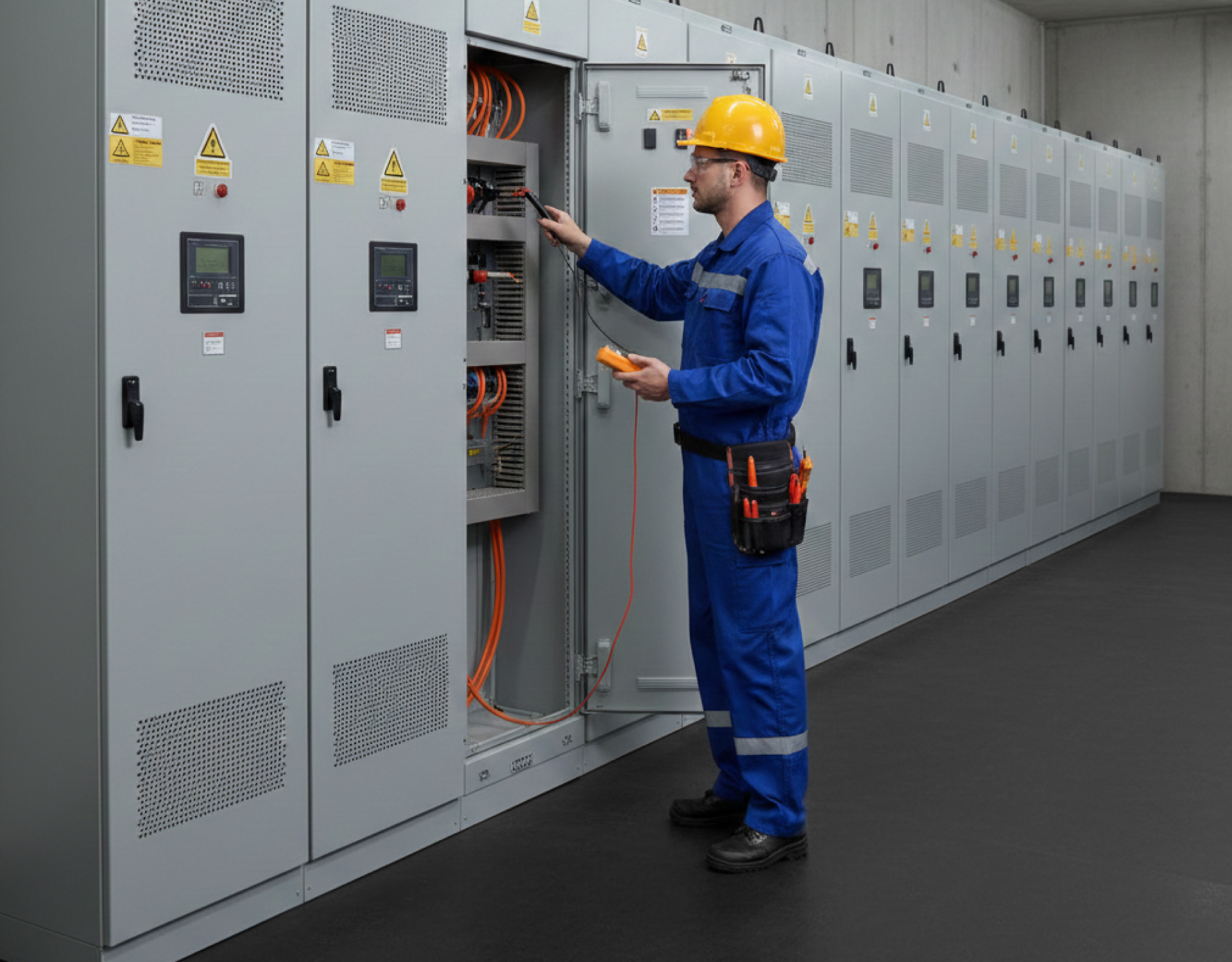
That is why ElectroMer® electrical insulating rubber mats are not just floor coverings,
but critical electrical safety equipment - starting from the correct rubber compound and hardness structure.
Need Help Selecting the Right Electrical Insulating Rubber Mat?
If you need professional guidance on choosing the correct electrical insulating rubber mat specification for your application, the ElectroMer® technical team is ready to assist.
LINE: @ptirubber Email: info@ptigroups.com
ElectroMer® - Engineered for Electrical Safety


