Is HNBR Rubber Sheet Food Grade?
520 Views |

Why Is the “Food Grade” Question So Critical in Modern Manufacturing?
Over the past 5–10 years, factories in the food, beverage, pharmaceutical, and packaging industries—as well as facilities subject to GMP, HACCP, ISO 22000, BRC, and FDA audits—have faced significantly stricter requirements.
One of the most critical focus areas is material safety for product contact, especially materials that may directly or indirectly touch food or pharmaceutical products.
Rubber sheets are widely used in key applications such as:
- Gaskets
- Machine seals
- Thermal insulation pads
- Rubber liners or protective sheets within production lines
As a result, the same question arises repeatedly:
- Is HNBR rubber sheet Food Grade?
- Can it be used in food-contact applications?
- If not, what material should be used instead?
This article explains the answer from an industrial engineering perspective, helping you select the correct material, reduce audit risks, minimize downtime, and avoid hidden long-term costs.
What Is HNBR Rubber Sheet?
Chemical Structure and Key Characteristics
HNBR (Hydrogenated Nitrile Butadiene Rubber) is an advanced form of NBR rubber that undergoes hydrogenation to improve resistance to:
- Heat
- Oxidation
- Aging and degradation
This process makes HNBR a high-performance industrial rubber, particularly suitable for demanding mechanical environments.
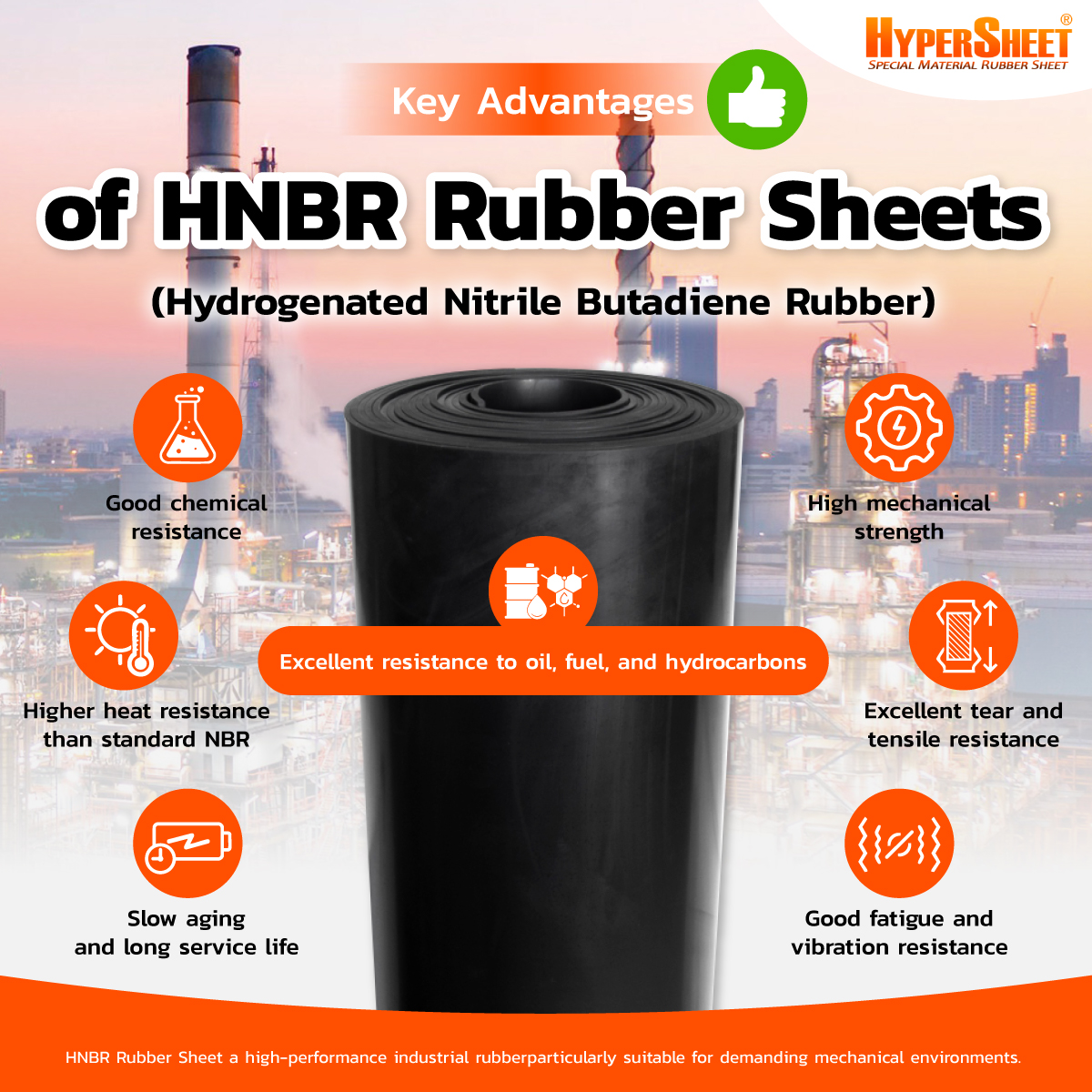
Key Advantages of HNBR Rubber Sheets
- Excellent resistance to oil, fuel, and hydrocarbons
- Good chemical resistance
- Higher heat resistance than standard NBR
- Slow aging and long service life
- High mechanical strength
- Excellent tear and tensile resistance
- Good fatigue and vibration resistance
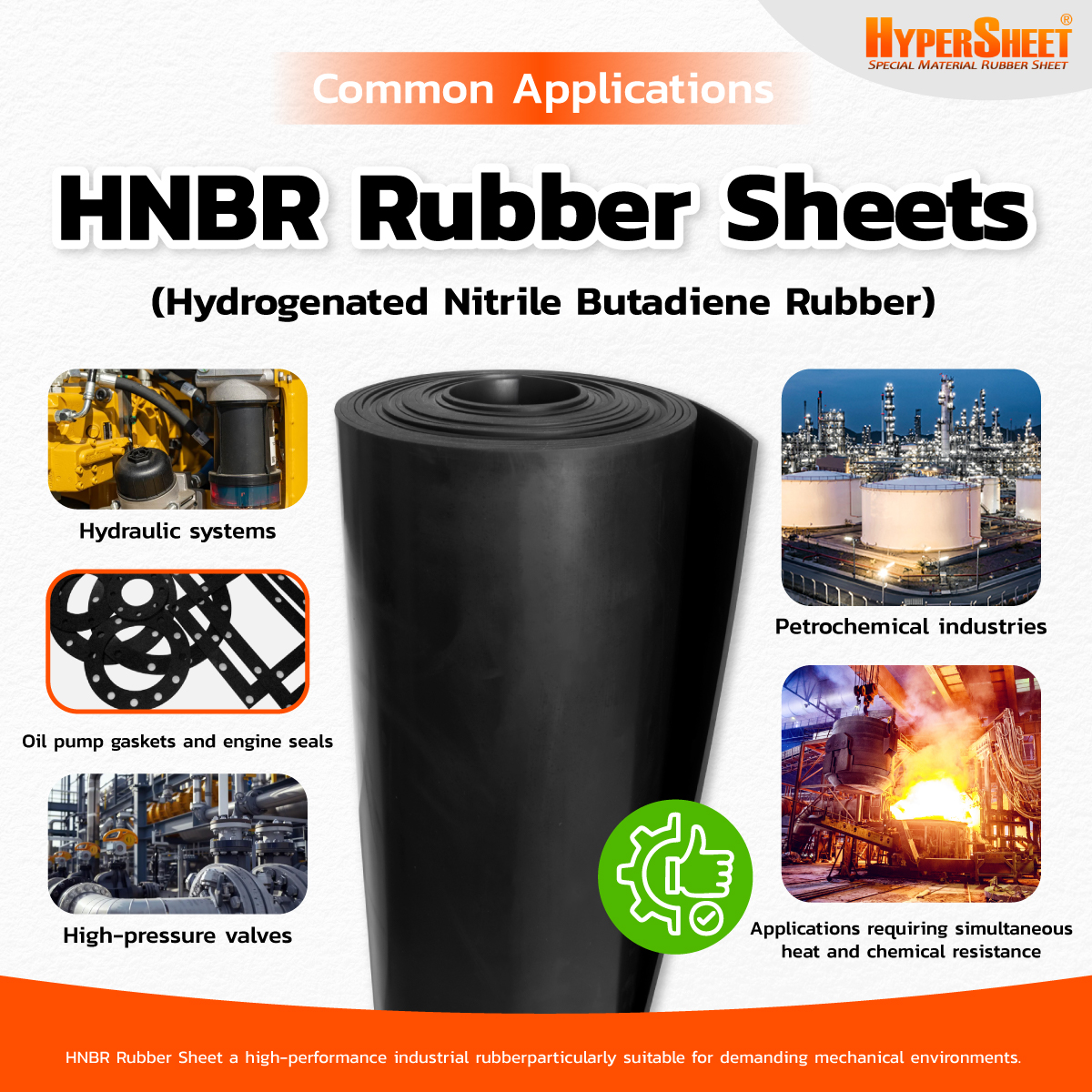
Common Applications of HNBR
- Hydraulic systems
- Oil pump gaskets and engine seals
- High-pressure valves
- Petrochemical industries
- Applications requiring simultaneous heat and chemical resistance
Critical Limitation: Why HNBR Is NOT Food Grade
Despite its outstanding mechanical performance, HNBR is not suitable for food contact due to several fundamental reasons.
1) Rubber Compounding Additives Are Not Food-Safe
HNBR formulations typically contain:
- Accelerators
- Antioxidants
- Anti-aging agents
Many of these substances are not approved for food contact and may migrate into food products when in direct contact.
2) Non-Compliance with FDA 21 CFR 177.2600
Food-grade materials must pass strict tests for:
- Chemical migration
- Volatile extractables
- Food simulant exposure
HNBR is not designed to meet these FDA requirements.
3) Lack of Food Contact Documentation
Most HNBR manufacturers do not provide Food Contact Declarations, as HNBR compounds are not developed as food-grade materials.
4) HNBR Is Not Chemically Inert
Food-grade materials should be chemically inert, meaning they do not react with food, oils, fats, or acids.
Silicone rubber excels in this property—HNBR does not.
Direct Conclusion
HNBR rubber sheets are NOT Food Grade and should NOT be used in direct food, beverage, or pharmaceutical contact applications.
Risks of Using the Wrong Rubber Material in Food Production
Selecting the wrong rubber material is not a one-time mistake—it can impact the entire production system.
5 Major Risks to Consider
- Chemical contamination risk
Additives in HNBR may migrate into food products. - Immediate audit failure
FDA, BRC, GMP, and HACCP auditors generally reject HNBR in food-contact zones. - Accelerated equipment degradation
HNBR may swell or degrade when exposed to hot fats, vegetable oils, or organic acids. - Increased downtime and hidden costs
Premature gasket failure leads to frequent shutdowns and higher real operating costs. - Export and legal risks
Even minor contamination can result in rejected shipments or full container losses.
Better Materials for Food-Grade Applications
Since HNBR is unsuitable, global factories typically choose materials that are:
Inert • Safe • Heat-Resistant • FDA-Compliant
Common alternatives include:
- Food-Grade Silicone Rubber Sheets
- FDA-Approved EPDM
- Food-Grade NBR (specific formulations)
For the highest safety and performance standards, many factories select:
HyperSheet® Silicone Rubber Sheet
What Is Food-Grade Silicone and Why Is It Preferred?
Silicone rubber features a chemically inert polymer network, meaning it:
- Does not react with food, oils, fats, or chemicals
- Does not release contaminants
- Maintains stability across wide temperature ranges

Key Benefits of Food-Grade Silicone
- FDA 21 CFR 177.2600 compliant
- Safe for direct food contact
- Continuous high-temperature resistance
- Odorless and non-toxic
- Resistant to fats, oils, and aging
- Compatible with CIP / SIP systems
- Steam and autoclave resistant
HyperSheet® Silicone QS vs HyperSheet® Silicone QM Firebrick
Engineering-Level Comparison
HyperSheet® Silicone QS (Transparent / White)
Food Grade | +220°C
Ideal for:
- Food & beverage production lines
- Food processing seals
- Filling and packaging gaskets
- Direct food-contact applications
- GMP / HACCP / ISO / FDA-audited factories
Key Features:
- QS (Quality Silicone) grade
- High-purity silicone compound
- FDA Food Grade certified
- Continuous heat resistance up to +220°C
- Clean white/transparent appearance
HyperSheet® Firebrick Silicone QM Rubber Sheet - High Heat +270°C
High Heat | +270°C
Ideal for:
- Industrial ovens
- High-temperature machinery
- Heat press applications
- Rubber & plastic processing lines
- Repeated heat-cycle environments
Key Features:
- Extreme heat resistance up to +270°C
- Firebrick color for high-heat identification
- Excellent shape retention
- Superior thermal stability
Material Comparison Table

Why Modern Factories Are Switching to HyperSheet® Silicone
- Stricter food safety regulations
- FDA compliance requirements
- Longer service life and reduced downtime
- Lower audit failure risk
- Export readiness (EU / USA)
- Higher process stability under heat, fat, and steam
Real-World Applications of HyperSheet® Silicone QS & QM
- Food packaging machine gaskets
- Processing tank seals
- Filter system seals
- Oven door seals
- Heat-press insulation pads
- Dairy & beverage production seals
- CIP / SIP system seals
- Stainless-steel tank lid gaskets
Frequently Asked Questions (FAQ)
Q: Can HNBR be used in food applications?
A: Not recommended. HNBR generally does not comply with FDA requirements and carries contamination risks.
Q: What is the difference between Silicone QS and Silicone QM?
A: QS = Food Grade +220°C
QM Firebrick = High-Heat Grade +270°C
Q: Can silicone rubber be used with steam?
A: Yes. Silicone supports steam and autoclave processes.
Q: Is silicone suitable for fatty or oily food products?
A: Yes. Silicone is chemically inert and highly resistant to fats and oils.
Technical Summary for Plant Engineers
- HNBR = Excellent for heavy industrial use, but not Food Grade
- Food, pharmaceutical, and beverage applications require FDA-approved materials
- HyperSheet® Silicone QS (+220°C) and QM Firebrick (+270°C) provide superior safety, stability, and audit confidence
Why Choose HyperSheet®?
If your factory operates in food, pharmaceutical, or beverage production, using HNBR is a risk—not just to materials, but to audit results, product quality, and total system cost.
Choose HyperSheet® Silicone Rubber Sheets, engineered specifically for industrial food-contact environments:
HyperSheet® Silicone QS
Food Grade | FDA | White / Transparent | Direct Food Contact
HyperSheet® Silicone QM Firebrick
High Heat | +270°C | Maximum thermal stability
Factory Services Available:
- Custom cutting & fabrication
- Gasket production from drawings
- Large ready stock for urgent projects (Thickness 0.5–25 mm | Width 1.2 m | Length 10 m/roll)
Contact HyperSheet® for Food-Grade Silicone Rubber Sheets
Line OA: @ptirubber
Email: info@ptigroups.com
Website: www.polytechindustry.co.th
Tel: +66 2 257 7154
MB/WhatsApp: +66 86 307 7319
Nationwide delivery | International export available


