Why Conventional Electrical Insulating Rubber Mats May Not Be Enough for High-Voltage Systems
1208 Views |

In industrial factories, large commercial buildings, hospitals, and electrical control centers,
high-voltage electrical systems are the backbone of daily operations.
When the electrical system stops, production stops — and in many cases, entire facilities come to a standstill.
Every day, engineers, technicians, and maintenance personnel work in close proximity to live electrical sources such as MDB panels, switchgear, and electrical control rooms.
Yet one critical safety component is often underestimated or treated as a commodity:
the electrical insulating rubber mat.
In reality, this single layer of protection can be the decisive barrier between safe operation and serious electrical accidents.
Conventional Electrical Insulating Rubber Mats: Why They Used to Be Enough — and Why They May Not Be Today
Many organizations continue to use conventional electrical insulating rubber mats for a simple and familiar reason:
“We have always used this type, and nothing has ever happened.”
What has changed, however, is the operating environment of modern electrical systems.
- Voltage levels are higher
- Electrical loads are heavier
- Equipment is more complex
- Electrical panels are opened for inspection and maintenance more frequently
Conventional electrical insulating rubber mats were often designed for earlier risk conditions.
They may not have been engineered to withstand abnormal events, such as heat buildup, electrical arcing, or flame propagation within electrical rooms.
High-Risk Areas in High-Voltage Electrical Systems That Must Not Be Overlooked
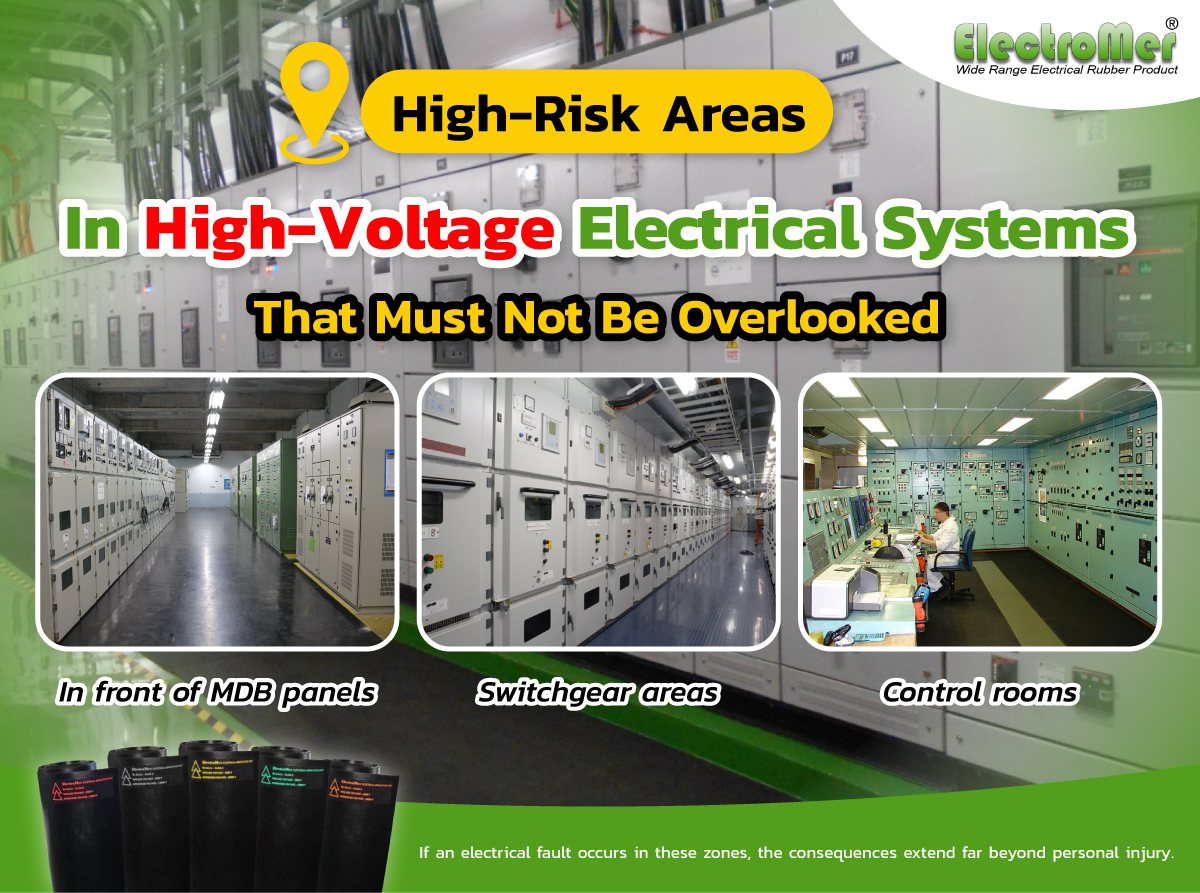
Certain locations require special attention due to elevated risk levels:
- In front of MDB (Main Distribution Board) panels
- Switchgear areas
- Electrical rooms / control rooms
If an electrical fault occurs in these zones, the consequences extend far beyond personal injury.
They may include:
- Production downtime
- Business interruption and financial loss
- Legal and compliance risks
- Damage to corporate reputation
This shifts the core question from:
“How much does the insulating mat cost?”
to a far more important one:
“How effectively will this insulating mat protect people when a real incident occurs?”
The Hidden Pain Points Many Organizations Are Only Beginning to Recognize
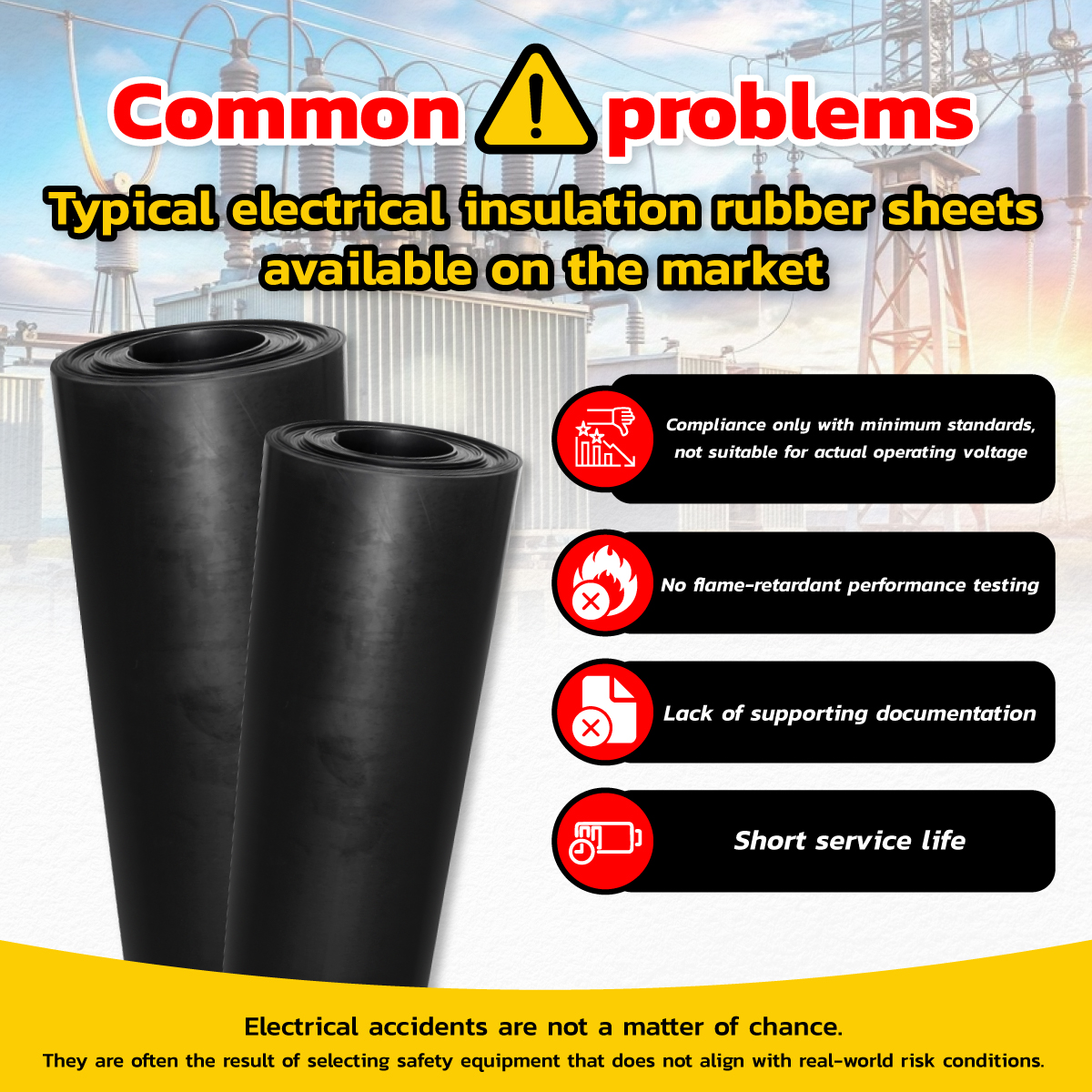
At first glance, most electrical insulating rubber mats appear similar in color, thickness, and surface finish. However, safety performance can vary significantly.
Common issues include:
- Compliance only with minimum standards, not suitable for actual operating voltage
- No flame-retardant performance testing
- Lack of supporting documentation such as Test Reports or Certificates of Analysis (COA)
- Short service life without routine condition assessment
Electrical accidents are not a matter of chance.
They are often the result of selecting safety equipment that does not align with real-world risk conditions.
When Electrical Insulation Alone Is No Longer Sufficient
In high-voltage environments, risk is not limited to electric shock or electrocution.
Fire propagation caused by electrical arcing or heat accumulation presents an equally serious threat.
This is why safety-focused organizations are increasingly adopting
Premium UL flame-retardant electrical insulating rubber mats.
Beyond meeting IEC 61111 electrical insulation requirements, these mats are tested to UL94 V-0 flame-retardant standards, ensuring that the material will not propagate fire if an abnormal event occurs.
ElectroMer® Premium UL Flame-Retardant Electrical Insulating Rubber Mats
are designed not only to insulate against electricity, but also to reduce secondary risks in environments where even a few seconds can make a critical difference.
The Perspective of Professional Organizations: Choosing to Reduce Long-Term Risk
Organizations with mature safety management systems do not view electrical insulating rubber mats as simple floor coverings.
They treat them as risk management tools.
The mindset shifts from:
- “Meeting minimum requirements”
to:
- “Being prepared for worst-case scenarios.”
Selecting high-standard solutions such as ElectroMer® Premium UL flame-retardant electrical insulating rubber mats becomes a strategic decision — not a price comparison exercise.
Electrical Insulating Rubber Mats Are Not a Cost — They Are a Responsibility
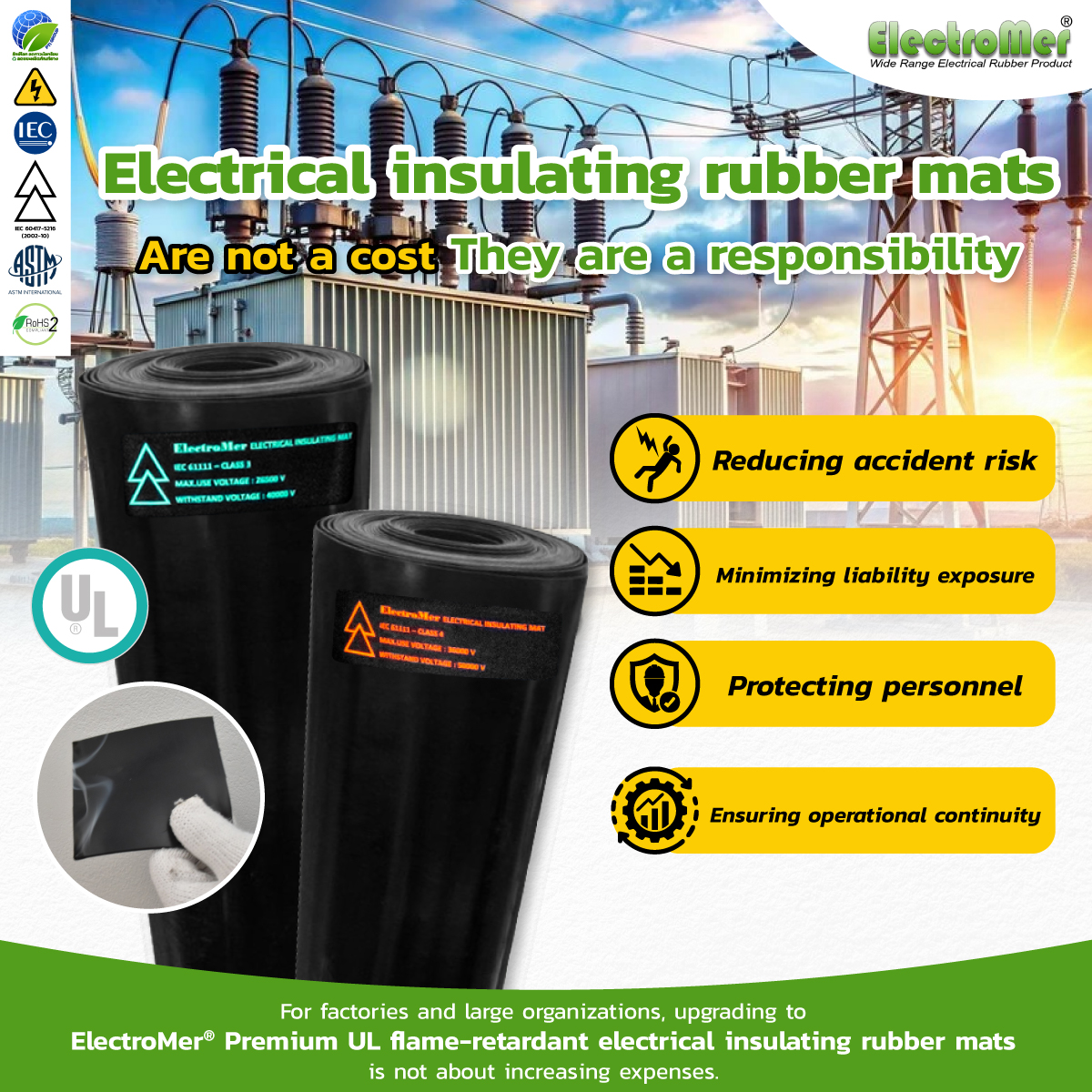
For factories and large organizations, upgrading to
ElectroMer® Premium UL flame-retardant electrical insulating rubber mats
is not about increasing expenses.
It is about:
- Reducing accident risk
- Minimizing liability exposure
- Protecting personnel
- Ensuring operational continuity
Ultimately, it builds confidence for everyone who works near high-voltage electrical systems.
Consult with Electrical Safety Specialists
If you are reassessing whether your current electrical insulating rubber mats are truly adequate for high-voltage systems,
consulting with specialists may be the most effective first step.
Our engineering team can help you select ElectroMer® Premium UL flame-retardant electrical insulating rubber mats for:
- MDB areas
- Switchgear zones
- Electrical control rooms
Free technical consultation
LINE: @ptirubber
Email: info@ptigroups.com
Choosing the right insulating rubber mat today may prevent the incident no one wants to face tomorrow.


