Difference Between CR Sponge Rubber and PE Foam | Choose the Right Material
1347 Views |

Differences Between CR Sponge Rubber and PE Foam: How to Choose the Right Material for Your Application
Sponge materials are widely used in industrial applications—ranging from sealing and gasketing to machine assembly and packaging. Two of the most commonly compared materials are:
- CR Sponge Rubber (Neoprene Sponge Rubber)
- PE Foam (Polyethylene Foam)
Even though both materials have a similar “sponge-like cellular structure,” their engineering properties are significantly different. These differences directly affect durability, service life, and the Total Cost of Ownership (TCO) of the system.
This article summarizes the key differences so you can select the most suitable material for your application.
What Is CR Sponge Rubber?
CR Sponge Rubber (Neoprene Sponge Rubber) is made from synthetic chloroprene rubber. Its key strength is the balance of properties: good elasticity, heat resistance, and chemical resistance at levels that meet real industrial conditions. It also shows environmental resistance comparable to EPDM sponge rubber in many applications.
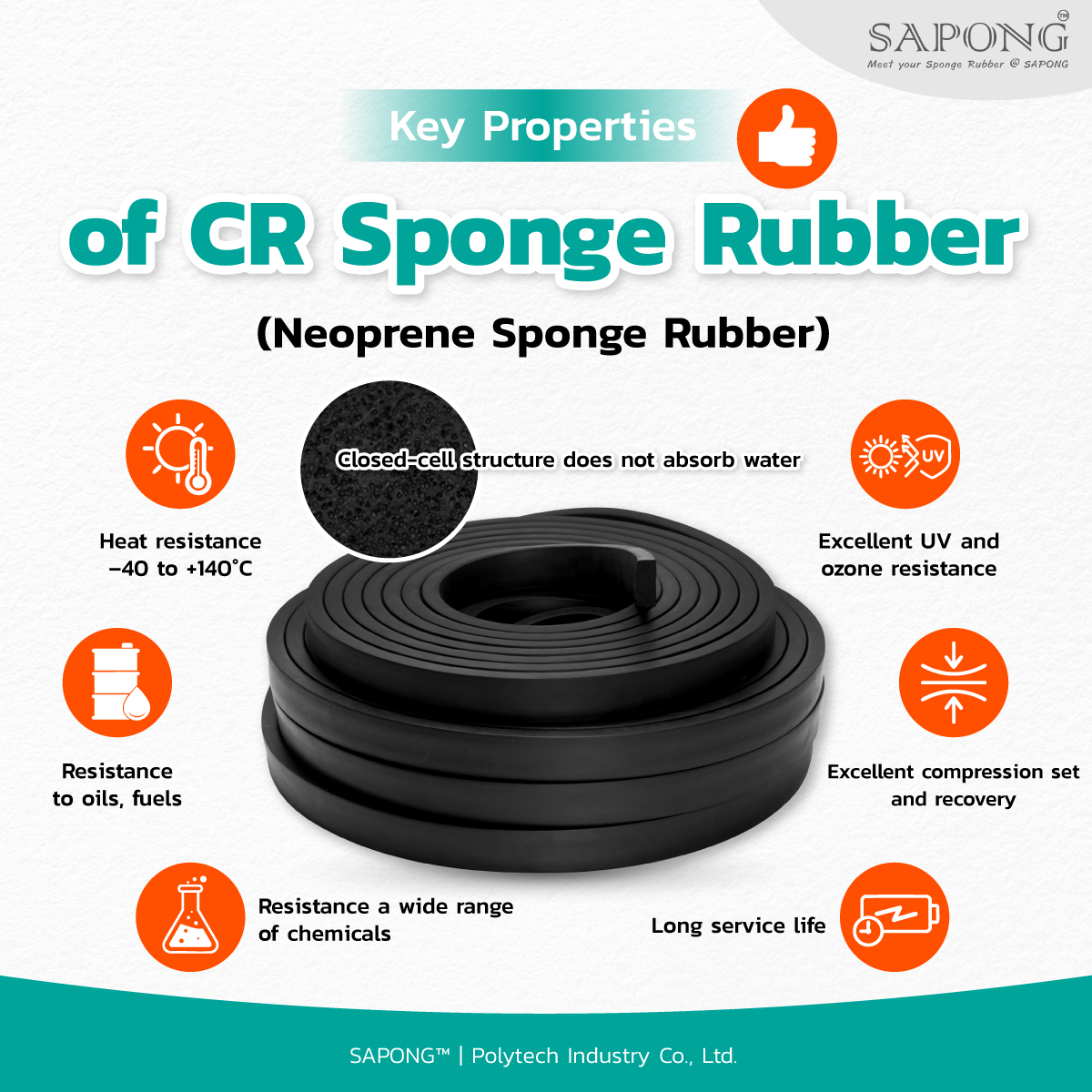
Key Properties of CR Sponge Rubber
- Closed-cell structure – does not absorb water
- Heat resistance of approximately –40 to +140°C
- Good resistance to oils, fuels, and a wide range of chemicals
- Excellent UV and ozone resistance – suitable for outdoor use
- Excellent compression set and recovery – ideal for seals that require stable compression force
- Long service life
Common Applications
- Door seals for electrical cabinets (MDB / Control Panel)
- Door seals for machinery and equipment
- Outdoor sealing applications
- Seals for automotive components
- Any application that requires high durability and long-term performance
What Is PE Foam?
PE Foam (Polyethylene Foam) is a closed-cell plastic foam that is extremely lightweight, low-cost, and easy to process. It is widely used in applications where long-term durability and harsh environmental resistance are not the primary requirements.
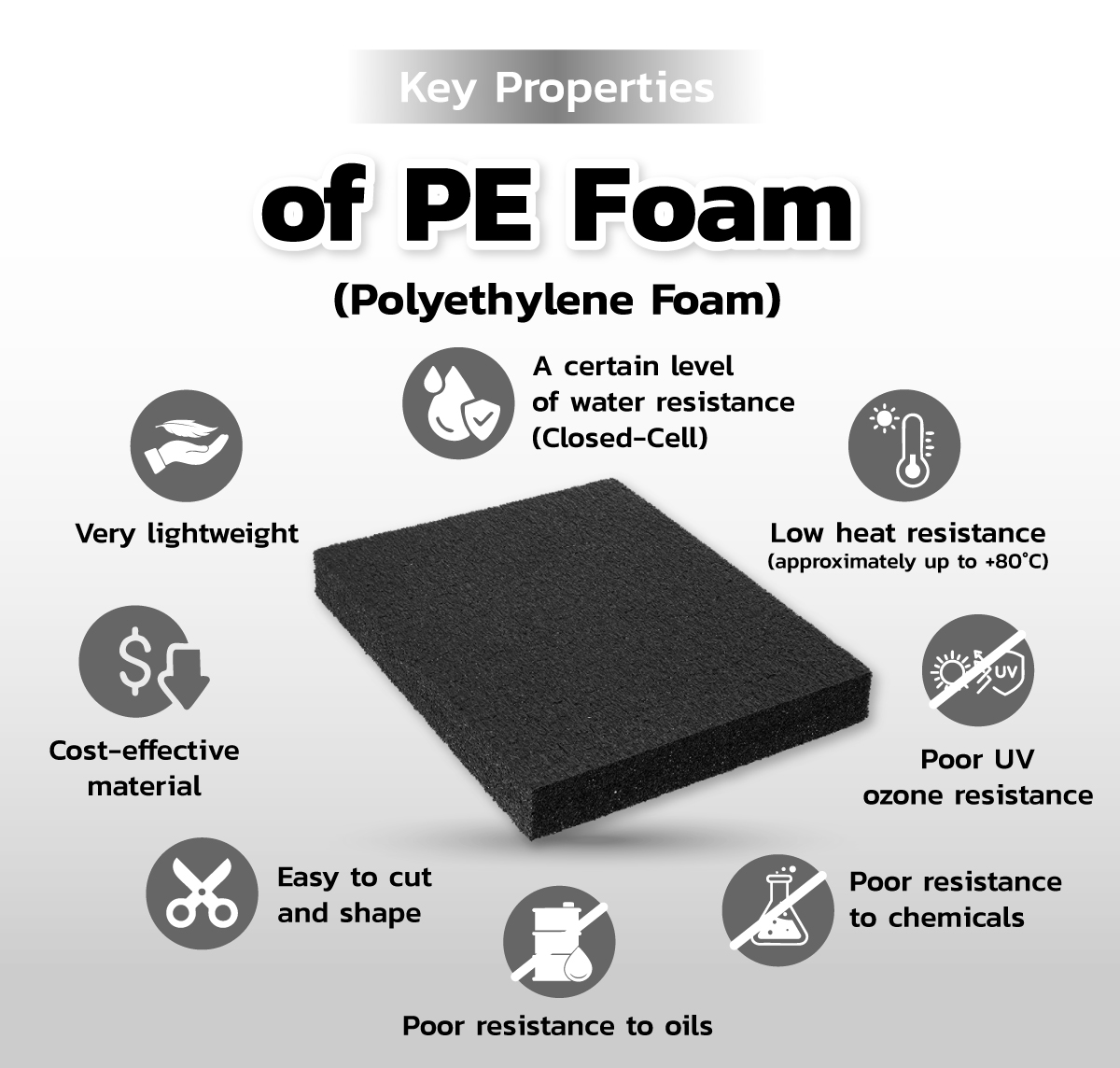
Key Properties of PE Foam
- Very lightweight
- Closed-cell structure provides a certain level of water resistance
- Cost-effective material
- Easy to cut and shape
- Low heat resistance (approximately up to +80°C)
- Poor UV / ozone resistance – not suitable for outdoor use
- Poor resistance to oils and chemicals – deforms or degrades quickly
Suitable Applications
- Protective packaging and cushioning
- Cushion / padding for general use
- Interior decorative applications
- Filling gaps inside furniture or panels
- Any application that does not encounter sunlight, oils, or chemicals
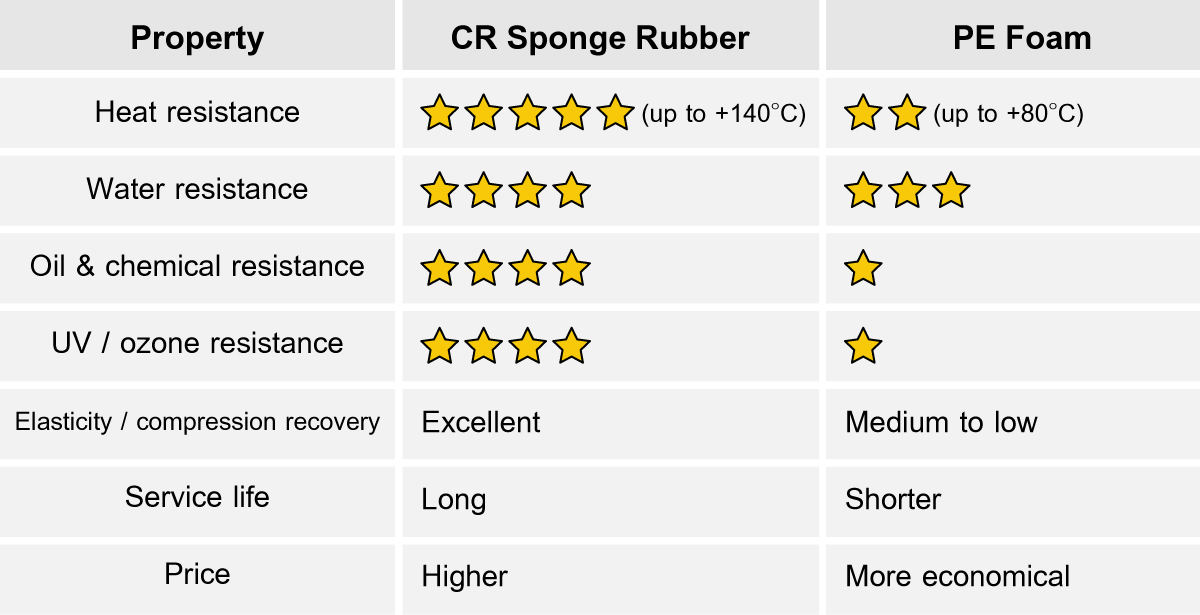
Comparison Table: CR Sponge Rubber vs PE Foam
How to Choose the Right Sponge Material for Your Application
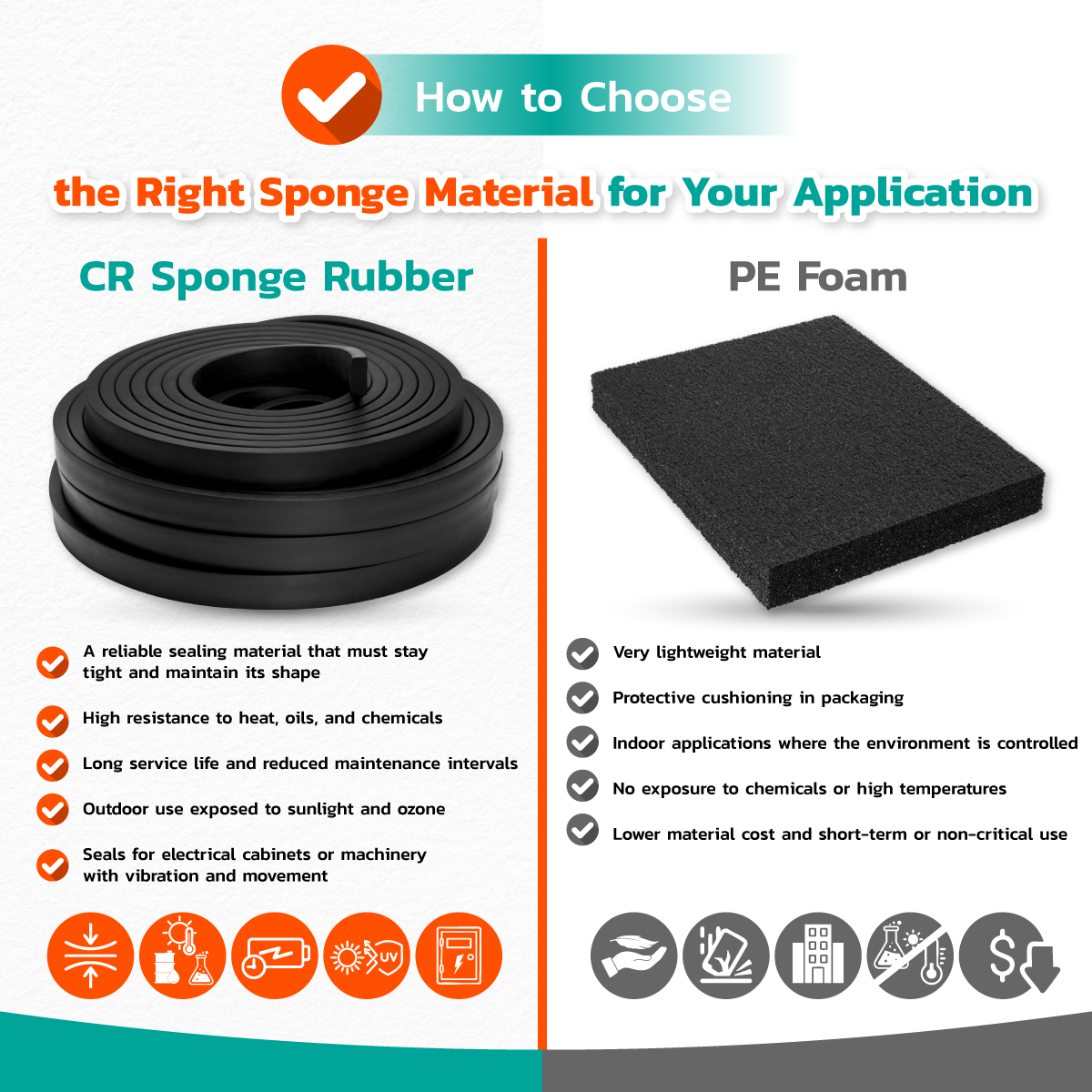
Choose CR Sponge Rubber if your application requires:
- A reliable sealing material that must stay tight and maintain its shape
- High resistance to heat, oils, and chemicals
- Long service life and reduced maintenance intervals
- Outdoor use exposed to sunlight and ozone
- Seals for electrical cabinets or machinery with vibration and movement
Choose PE Foam if your application requires:
- Very lightweight material
- Protective cushioning in packaging
- Indoor applications where the environment is controlled
- No exposure to chemicals or high temperatures
- Lower material cost and short-term or non-critical use
Why Are Many Factories Switching from PE Foam to CR Sponge Rubber?
In real industrial environments, problems caused by “compressed seals, water ingress, and dust intrusion” can lead to significant hidden costs, such as:
- Damage to machinery and equipment
- Product quality issues or contamination
- Increased downtime and maintenance
- Safety risks for operators and staff
Although CR sponge rubber is more expensive per meter, when you consider the overall system performance and Total Cost of Ownership, it often becomes the more economical choice in the long run.
Conclusion: Key Differences Between CR Sponge Rubber and PE Foam
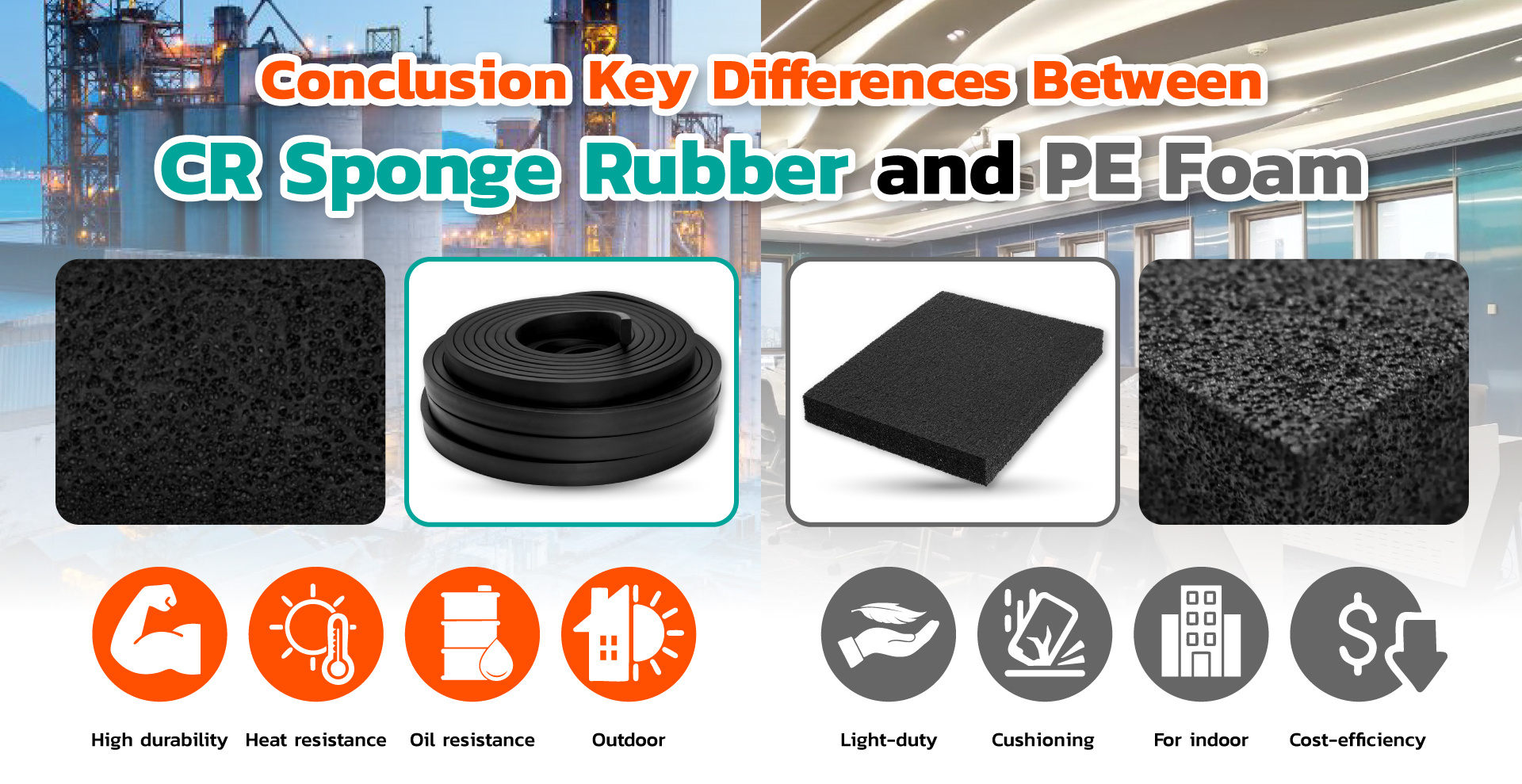
- CR Sponge Rubber is ideal for critical sealing applications that require high durability, heat resistance, oil and chemical resistance, and outdoor performance.
- PE Foam is suitable for light-duty applications, such as cushioning and packaging, for indoor use where cost-efficiency and low weight are more important than long-term durability.
Choosing the right material from the design and procurement stage helps minimize future problems and significantly improves the stability and reliability of your production process.
FAQ - CR Sponge Rubber vs PE Foam
Q1: Can CR sponge rubber and PE foam be used interchangeably?
Not recommended. Their properties are very different, especially in terms of durability, heat resistance, and long-term compression performance.
Q2: Which material is better for sealing electrical cabinet doors?
CR sponge rubber is strongly recommended because it provides reliable water and dust sealing and maintains its shape and compression over time.
Q3: If I have a limited budget, can I use PE foam instead?
You can use PE foam for light-duty applications such as cushioning, packaging, or non-critical indoor uses. It is not suitable for harsh environments or critical seals.
Q4: Which material is best for outdoor applications?
CR sponge rubber is the better choice due to its superior UV, ozone, and heat resistance.
Need More Information or a Quotation?
If you need more information about sponge rubber products
or would like to order custom-made sponge rubber seals, please contact us:
Line Official: @ptirubber
Email: info@ptigroups.com
Tel: +662-257-7154
Mobile: +6686-307-7319


